WER Medical
WER Medical
WER Medical
Explore our premium clinical formulations engineered for targeted tissue stabilization, advanced fluid management, and rapid bio-reintegration.
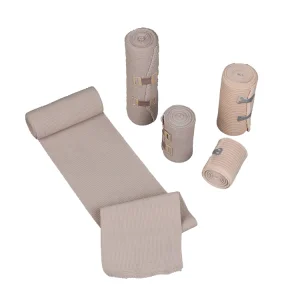
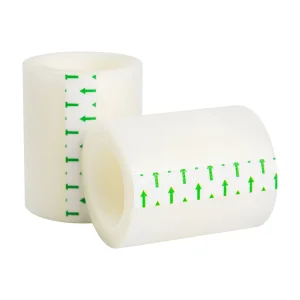
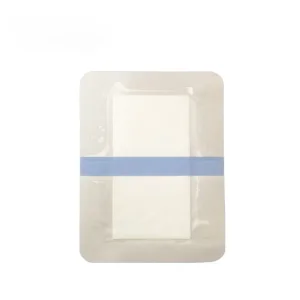
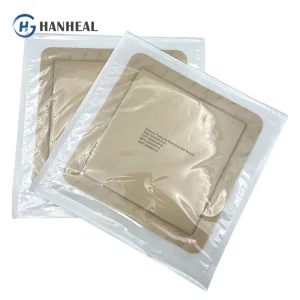
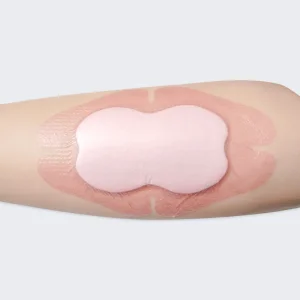
Within professional healthcare spaces, the clinical efficacy of an elastic compression bandage rests not merely on elasticity, but on the precise execution of Laplace’s Law. High-performance compression therapy demands a calculated balance between rest pressure and active work pressure. In response to these strict medical demands, our manufacturing framework prioritizes high-spandex structures blended with premium long-staple cotton to control the dynamic hysteresis curve of the fiber.
Standard non-stretch bandages fail to adapt to changes in limb circumference, leading to slips or focal pressure points. Conversely, our engineered high-spandex medical crepe bandages deliver controlled, graduated compression. This stimulates deep venous returns, reduces deep vein thrombosis risk, and accelerates tissue clearance without restricting arterial inflow. For critical clinical treatments, this provides a predictable therapeutic platform that supports patient mobility and speeds recovery.
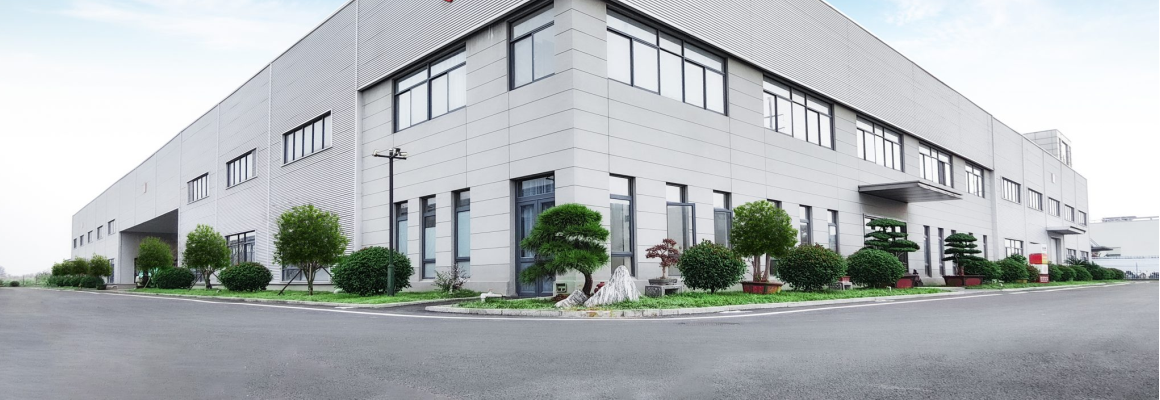
Since 2018, WER Medical has pushed the boundaries of wound care and compression technology from our state-of-the-art 10,000㎡ facility in Guangzhou.
Using next-generation high-speed electronic dobby looms, we achieve unmatched structural consistency across every roll. Spandex tensioning is electronically monitored in real-time, eliminating localized density variations that often cause clinical performance drops.
Our coating lines utilize pure medical-grade acrylic and silicone adhesive compounds. Working alongside our silicone foam dressing division, we create hybrid, non-slip technologies that remain gentle on sensitive or fragile skin.
Every batch undergoes strict EO (Ethylene Oxide) validation protocols within automated chambers. This guarantees low biological burdens, extends shelf life, and ensures medical dressings remain secure and sterile until opened.
Navigating global healthcare distribution requires strict regulatory alignment. As a trusted manufacturer of CE-certified elastic compression bandages, WER Medical operates under certified ISO 13485 Quality Management Systems. Our processes are designed to meet the strict documentation standards of the European Union Medical Device Regulation (MDR EU 2017/745).
Fully compliant with international cytotoxicity, sensitization, and intracutaneous reactivity evaluations, ensuring long-term contact safety for patients.
Textile tests verify that pressure remains stable under dynamic loads, keeping performance consistent even during active leg movement.
Full manufacturing data integration from raw cotton receipt to shipping, supporting reliable post-market surveillance (PMS) pathways.
We work with international brand owners, large healthcare distributors, and state hospitals to build resilient, reliable supply chains.
Choose customized options for widths, lengths, surface textures, and stretch ratios (from 60% up to 180%) to match the clinical requirements of your local market.
We offer white-label customized packaging, including single sterile wrappers, multi-lingual inner boxes with UDI codes, and robust outer master cartons built for long sea transit.
Our sales office in Shenzhen works alongside our main factory in Guangzhou to coordinate smooth logistics, fast export handling, and transparent custom clearances worldwide.
To design effective compression treatment for lower limb venous ulcers, manufacturers must understand how pressure acts on soft tissue. The pressure applied to a limb is governed by Laplace's Law, which can be expressed mathematically as:
Where:
P = Sub-bandage pressure in millimeters of mercury (mmHg)
T = Bandage tension (kgf) applied during application
N = Number of layers applied (e.g., spiral wrap at 50% overlap equals 2 layers)
C = Circumference of the target limb (cm)
W = Width of the bandage (cm)
This formula highlights why material consistency is so critical. If the textile structure is uneven or prone to stretching out of shape under static load, tension (T) drops quickly. This leaves the patient with insufficient pressure to support venous flow.
To prevent this, WER Medical uses advanced raw material testing and automated blending. This ensures our bandages maintain consistent, stable tension throughout the entire wear period.
Understanding the differences between long and short stretch systems is essential for distributors when sourcing products for medical networks:
| Parameter | Short-Stretch Bandage (<100% Extensibility) | Long-Stretch Bandage (>100% Extensibility) |
|---|---|---|
| Rest Pressure | Low (Comfortable during rest/sleep) | High (Must be removed at night) |
| Working Pressure | Very High (Provides firm resistance during muscle activity) | Moderate (Adapts dynamically to changing muscle shapes) |
| Primary Indication | Chronic Lymphedema, Venous Stasis Ulcers | Acute Sports Injuries, Varicose Support, Orthopedics |
Key information regarding materials science, quality certifications, and volume purchasing options.
We blend premium long-staple cotton with medical-grade spandex polymers. This combination ensures high air permeability, excellent sweat management, and consistent stretch recovery. By avoiding low-grade latex filaments, we significantly reduce the risk of patient skin irritation and allergic reactions during extended wear.
Our quality processes conform fully to Annex I of the EU MDR 2017/745. We conduct comprehensive physical testing on every lot, including pressure degradation curves and biocompatibility analysis (ISO 10993). This ensures global distributors receive highly reliable, fully documented Class I/IIa medical devices.
Standard white-label packages start at competitive MOQs, depending on dimensions. For fully customized sizes, custom fabric weaves, or private-label retail boxes, we work closely with clients to offer scalable, step-by-step order structures. This allows you to scale up production comfortably as market demand grows.
Yes, our premium elastic cotton construction allows for repeated washing with mild detergent at lukewarm temperatures without losing tension. However, in professional sterile clinical environments, we recommend single-patient use to maintain optimal hygiene and clinical safety.
Explore our complete range of specialized clinical fixations and sterile barriers, designed to secure devices and support reliable patient recovery.