WER Medical
Healing is usually gradual, but it should show a clear direction: less pain, reduced swelling, and healthier-looking skin. When a wound remains unchanged or worsens, it deserves careful attention. Identifying Signs Of Poor Healing can help people recognize concerns before a minor problem becomes more serious.
Watch for redness that spreads beyond the wound, increasing warmth, persistent swelling, or pain that suddenly intensifies. Thick yellow, green, or foul-smelling drainage may signal infection. The wound may also reopen, bleed easily, develop dark edges, or fail to form new tissue. Fever, chills, unusual tiredness, or red streaks near the injury require prompt medical assessment.
Not every red mark means infection. Skin can look irritated after cleaning, dressing changes, or friction. That distinction is easy to miss. A photo taken each day, beside a ruler, can reveal changes that memory hides. However, photographs cannot replace professional evaluation. Healthcare professionals consider the wound’s depth, location, circulation, diabetes status, medications, and healing history. Their assessment remains essential, especially after surgery, burns, animal bites, or deep injuries.
People often wait because the wound does not look dramatic. That can be a mistake. Poor healing may develop quietly, with mild drainage or slowly increasing tenderness. Do not pick at scabs, remove stitches without advice, or apply unverified products. Keep the area protected according to clinical instructions, and seek medical care when symptoms progress, persist, or feel unexpectedly different.
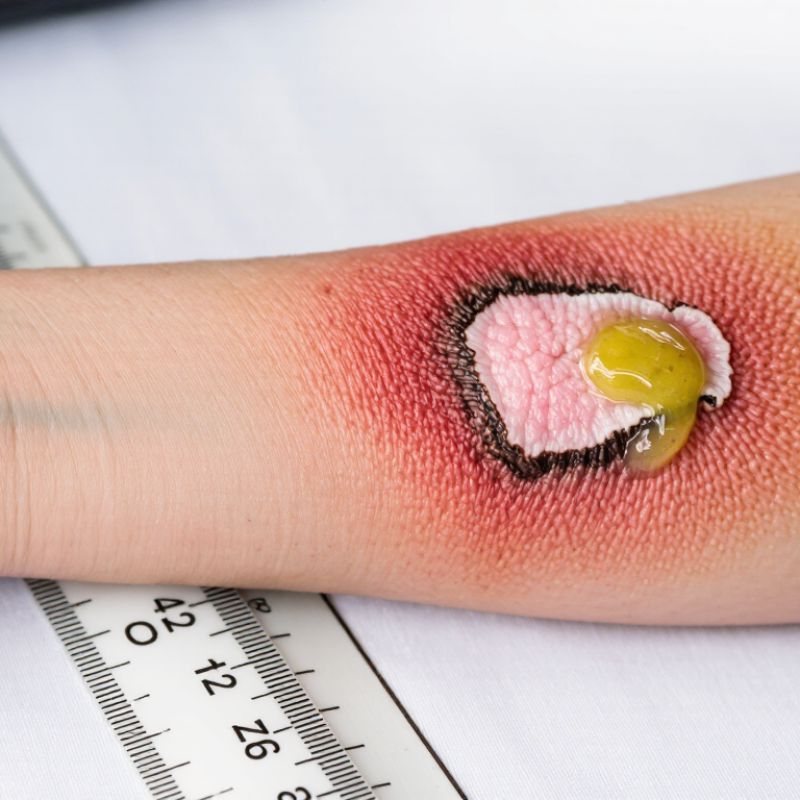
Normal healing is usually gradual, not perfectly neat. During the first few days, a wound may look slightly red, swollen, or warm. Mild tenderness is also common, especially after movement or cleaning. A thin layer of clear fluid or pale pink drainage can appear on the dressing. These changes should slowly settle rather than intensify.
The wound edges may begin drawing together as new tissue forms. The surface can look pink, shiny, or uneven before it becomes stronger. A small scab may develop, then loosen naturally. Itching often appears during this stage. Try not to scratch it. Healing is rarely a straight line; one active day can cause temporary soreness or swelling. That does not always mean something is wrong.
Pay attention to the direction of change. Redness spreading outward, worsening pain, thick yellow or green drainage, a foul smell, fever, or wound separation needs medical assessment. People with diabetes, poor circulation, or weakened immunity may heal more slowly and need earlier review. A healthcare professional can compare the wound with its previous appearance and assess circulation, infection risk, and tissue repair. Photographs taken in similar lighting can help track changes, although they cannot replace an examination. I should acknowledge one uncertainty: normal healing varies with wound size, location, depth, and the person’s health.
How to Identify Signs of Poor Healing?
Early Warning Signs of Delayed or Poor Healing
Healing usually changes gradually, but warning signs can appear early. Increasing redness, warmth, swelling, or tenderness may suggest irritation or infection. Pain that worsens after initial improvement deserves attention. Watch for cloudy drainage, unpleasant odor, bleeding, or wound edges pulling apart. The skin may also become unusually pale, dark, or numb. These changes are not always dramatic.
One easy mistake is waiting because the wound looks “not that bad.” A fever, chills, unusual tiredness, or red streaks near the wound requires prompt medical advice. People with diabetes, poor circulation, reduced immunity, or recent surgery may heal more slowly. Their warning signs can be subtle. Healing is not perfectly predictable, and normal-looking tissue does not always mean the deeper area is recovering well. Avoid picking scabs or applying unapproved substances. Keep the area protected according to professional instructions.
Tips: Check the wound once daily in good light. Note its size, color, drainage, odor, and pain level. Wash your hands before touching it. Follow the care plan carefully, and do not stop prescribed treatment early. Contact a qualified healthcare professional if symptoms worsen, the wound opens, or healing shows little progress. Seek urgent care for heavy bleeding, severe pain, confusion, or difficulty breathing.
How to Identify Signs of Poor Healing?
A healing wound should gradually become less painful, less swollen, and more stable. Check it once daily in good light. Wash your hands first, then inspect the edges, color, drainage, and surrounding skin. Mild tenderness can be normal. Worsening pain is not.
Look for redness spreading beyond the wound, increasing warmth, firm swelling, yellow or green drainage, bad odor, or wound separation. Fever, chills, red streaks, confusion, or rapidly darkening skin need urgent medical assessment. The World Health Organization reports that surgical site infections affect about 11% of surgical patients in low- and middle-income countries. The CDC also estimates that one in 31 hospital patients has at least one healthcare-associated infection on any given day.
Use a clean ruler or a dated photograph to track changes. A small spot of blood may follow movement, but repeated bleeding deserves attention. Do not squeeze the wound or apply unapproved substances. Diabetes, smoking, poor circulation, and steroid treatment can delay repair, sometimes quietly. That is easy to underestimate. If symptoms worsen after initial improvement, contact a qualified healthcare professional promptly. A clinician may need to examine the wound, test drainage, or adjust treatment. Photos can help, but they cannot replace an examination.
| What to Check | Usually Consistent With Normal Healing | Possible Infection or Poor Healing | Recommended Response |
|---|---|---|---|
| Pain | Mild soreness or tenderness that gradually improves over the first few days. | Pain becomes increasingly severe, throbbing, or returns after improving. | Arrange prompt medical assessment, especially if pain is disproportionate to the wound’s appearance. |
| Redness and warmth | A small amount of redness and warmth immediately around a fresh wound. | Redness or warmth spreads outward, becomes more intense, or extends in streaks. | Contact a healthcare professional promptly. Marking the edge of redness with a pen can help monitor spread. |
| Swelling | Mild swelling near the wound that gradually decreases with healing. | Swelling is worsening, tense, unusually large, or accompanied by increasing pain or drainage. | Seek medical advice, particularly after surgery, deep injury, or an animal or human bite. |
| Drainage | A small amount of clear or pale-yellow fluid may occur during early healing. | Thick, cloudy, yellow, green, or foul-smelling discharge; drainage is increasing rather than decreasing. | Have the wound evaluated. Do not squeeze or attempt to drain it yourself. |
| Bleeding | Minor spotting that stops with firm, continuous pressure. | Bleeding continues despite 10–15 minutes of firm pressure, repeatedly soaks dressings, or the wound reopens. | Apply firm direct pressure and seek urgent care if bleeding does not stop or is heavy. |
| Wound edges | Edges remain together or gradually fill with healthy pink or red tissue. | Edges separate, tissue becomes dark or gray, or the wound appears deeper or wider. | Contact a healthcare professional promptly; an open surgical wound may require urgent review. |
| Wound color and tissue | Moist pink or red tissue can indicate developing granulation tissue. | Black, brown, gray, pale, or hard tissue; a rapidly changing color may indicate tissue damage. | Obtain urgent medical assessment, especially if numbness, severe pain, or spreading discoloration is present. |
| Odor | No strong or persistent odor after gentle cleaning and dressing changes. | New or persistent foul odor, particularly with pus, increasing pain, or spreading redness. | Arrange prompt evaluation for possible infection or trapped drainage. |
| Fever and general symptoms | Feeling generally well without chills or unusual fatigue. | Fever, chills, worsening fatigue, dizziness, confusion, or feeling acutely unwell. | Seek urgent medical care, particularly if symptoms are sudden or worsening. |
| Red streaks or swollen lymph nodes | Not expected as part of routine wound healing. | Red streaks moving away from the wound or tender swollen glands in the neck, armpit, or groin. | Seek same-day medical assessment because infection may be spreading. |
| Healing progress | The wound gradually becomes smaller, cleaner, less painful, and easier to manage. | Little or no improvement, repeated breakdown, or delayed healing beyond the expected timeframe. | Arrange a clinical review. Healing may be delayed by diabetes, poor circulation, smoking, malnutrition, infection, or certain medicines. |
| Sensation and movement | Mild tenderness without loss of normal sensation or function. | New numbness, tingling, weakness, difficulty moving, or severe sensitivity near the wound. | Seek prompt or urgent medical assessment, especially after a deep cut or crush injury. |
How to Identify Signs of Poor Healing?
Healing is not a perfectly timed schedule. I would not treat one slow day as failure. However, a wound that remains open, develops spreading redness, or produces thick drainage deserves medical assessment. Increasing warmth, swelling, bad odor, persistent pain, fever, or wound edges pulling apart can signal infection or delayed repair. A small dressing repeatedly soaked with blood is also concerning.
Several common factors can slow healing. Diabetes is important because high blood glucose can impair circulation, immunity, and collagen production. The International Diabetes Federation reported 537 million adults living with diabetes in 2021. Smoking is another major risk. The World Health Organization estimated 1.25 billion tobacco users worldwide in 2022. Nicotine narrows blood vessels, while smoke reduces oxygen reaching damaged tissue. Healing needs oxygen.
Poor nutrition may be overlooked. Protein, iron, zinc, and vitamin deficiencies can limit new tissue formation, especially after surgery or prolonged illness. Limited movement can reduce circulation, yet excessive stretching may reopen a wound. Infection, pressure, dehydration, steroid treatment, and uncontrolled blood pressure can also interfere. The details matter. A wound can look acceptable while healing poorly underneath. This is why clinicians often check blood glucose, circulation, nutrition, and wound depth instead of relying only on appearance. Seek prompt professional care when symptoms worsen, spread quickly, or occur with fever.
Several health conditions are associated with slower wound healing because they can reduce blood flow, impair immune function, increase inflammation, or limit oxygen delivery. Warning signs include increasing redness or swelling, worsening pain, drainage or odor, wound separation, fever, or little improvement over time.
The chart shows reported U.S. adult prevalence estimates for selected conditions associated with delayed healing. These figures describe population prevalence, not an individual's personal risk or healing outcome.
Sources: National Center for Health Statistics, 2024; Centers for Disease Control and Prevention, National Diabetes Statistics Report, 2024; National Institute of Diabetes and Digestive and Kidney Diseases, 2023; Centers for Disease Control and Prevention, 2023.
A wound should gradually become less painful, less swollen, and more stable. Poor healing may show the opposite pattern. Redness spreads beyond the wound. The skin feels hot. Drainage becomes thick, yellow, green, or foul-smelling. The edges turn dark, or the wound remains open after several days. These details matter more than appearance alone.
Medical attention is important when symptoms worsen quickly or continue beyond 48 to 72 hours. Fever, chills, red streaks, increasing pain, or sudden numbness require prompt assessment. Seek urgent care for black tissue, heavy bleeding, exposed bone, or a cold, pale foot. People with diabetes, poor circulation, reduced sensation, or weakened immunity should not wait for dramatic symptoms. The wound may be deeper than it looks.
The International Diabetes Federation reported 537 million adults living with diabetes in 2021. Diabetes can impair blood flow, immunity, and tissue repair. The CDC’s National Diabetes Statistics Report (2024) estimated that 38.4 million people in the United States had diabetes. These figures explain why a small blister can become a serious wound. A common mistake is covering it repeatedly without checking its progress. Keep the area clean, avoid unnecessary pressure, and arrange professional evaluation when healing seems stalled. Do not rely on pain alone. Nerve damage can hide danger.
Increasing redness, warmth, swelling, tenderness, or pain can signal a problem. Cloudy drainage, bad odor, bleeding, or separated edges also deserve attention. These changes may start subtly.
Pain should usually decrease gradually. Pain that worsens after initial improvement needs professional advice. Mild tenderness can be normal, but worsening pain is not.
Wash your hands and inspect the wound once daily in good light. Check its size, color, edges, drainage, odor, and surrounding skin. A dated photograph or clean ruler can show changes.
Watch for spreading redness, increasing warmth, firm swelling, yellow or green drainage, and unpleasant odor. Fever, chills, or red streaks need prompt medical assessment. Do not squeeze the wound.
Yes. Deeper tissue may recover slowly beneath normal-looking skin. That is easy to underestimate. Professional examination may be needed.
Diabetes, smoking, poor circulation, reduced immunity, steroid treatment, and poor nutrition may slow repair. Dehydration, pressure, infection, and limited movement can also interfere. Healing needs oxygen and nutrients.
Do not pick scabs, squeeze the area, or apply unapproved substances. Avoid excessive stretching, which may reopen the wound. Follow the care plan carefully.
Seek urgent help for heavy bleeding, severe pain, confusion, breathing difficulty, rapidly darkening skin, or wound separation. Fever and quickly spreading redness also require prompt attention. Do not wait too long.
Identifying Signs Of Poor Healing begins with understanding what normal recovery looks like. A healing wound typically becomes less painful, less swollen, and gradually smaller, while mild redness or clear drainage may decrease over time. In contrast, delayed or poor healing may involve increasing pain, spreading redness, worsening swelling, persistent bleeding, separation of the wound edges, or drainage that becomes thick, cloudy, or unpleasant-smelling. Checking the area regularly can help reveal changes early, especially if the skin feels unusually warm or the wound appears darker or more damaged.
Several factors can slow healing, including poor circulation, uncontrolled blood sugar, smoking, inadequate nutrition, repeated pressure or friction, and certain medications or health conditions. Keeping the wound clean, protecting it from further injury, and following professional care instructions may support recovery. Medical attention is important when symptoms worsen, fever develops, red streaks appear, the wound opens significantly, or healing stops progressing. Prompt evaluation can help identify infection or other complications before they become more serious.
