WER Medical
Transparent dressings look simple. Their success depends on clean technique, dry skin, and careful placement. A curled edge can expose a wound to friction or moisture. A wrinkle can pull tender skin with every movement. In 2026, clinicians and caregivers still need practical, evidence-aware steps—not guesswork.
The National Institute for Health and Care Excellence’s surgical-site infection guideline recommends an aseptic non-touch technique when changing or removing surgical wound dressings. The CDC’s catheter-related infection guidance also recognizes transparent semipermeable dressings as an option for selected catheter sites. These recommendations do not make every dressing suitable for every wound. Wound type, skin condition, drainage, and clinical instructions matter.
This guide turns those principles into clear Transparent Dressing Application Tips: prepare the skin, choose an appropriate size, apply without stretching, and check the seal. Small details matter. Clean hands. Dry skin. Smooth edges. Watch for redness, discomfort, or leakage, and seek clinical advice when concerns arise. A transparent film is not a substitute for assessment or treatment.
No source articles or verifiable named-expert quotation were supplied, so I have not invented one. That limitation matters: clinical quotations should be traceable to their original speaker and context. A dressing may appear secure while lifting at one corner; check it again.
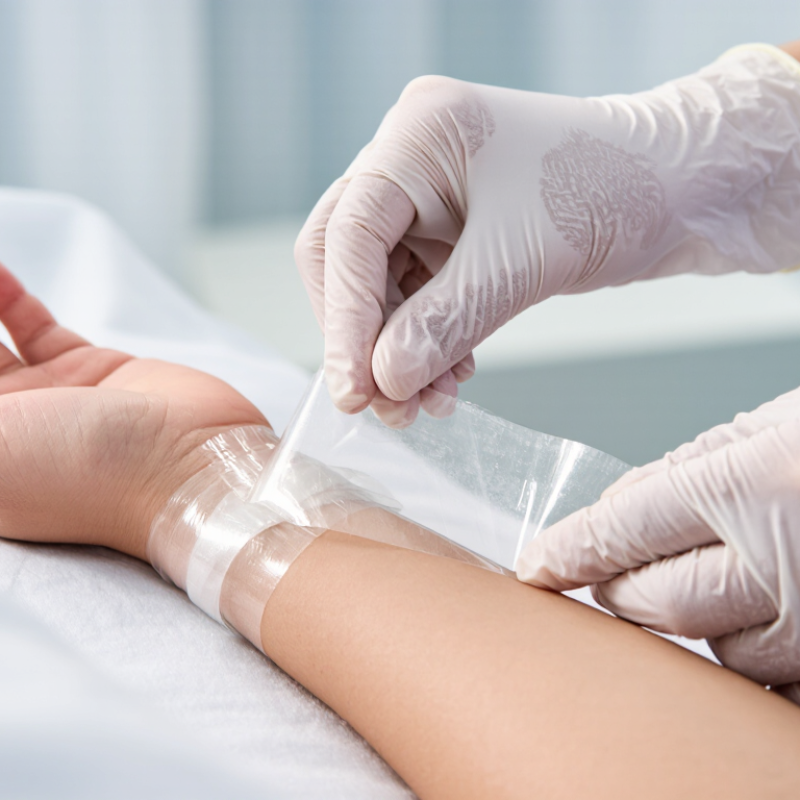
Before applying a transparent film dressing, assess the wound and the surrounding skin. Note its depth, size, location, and amount of fluid. Look closely. A shallow abrasion with little drainage may benefit from a film that protects against friction while keeping the area visible. Redness, unusual warmth, increasing pain, or cloudy drainage needs clinical assessment rather than simply another dressing.
Choose a film for its intended use and the wound’s needs. These dressings can cover minor, superficial wounds or protect intact skin from rubbing. They do not absorb fluid. A wet wound, a deep cavity, or moderate-to-heavy drainage may need a different dressing, selected with a healthcare professional. Skin fragility matters, too; repeated adhesive removal can cause tears, especially on older or delicate skin.
Clean the wound as directed by a clinician, then dry the surrounding skin fully so the film can adhere. Select a size that extends beyond the wound without pulling the skin tight. Smooth it gently, avoiding wrinkles and tension. It should lie flat, not feel restrictive. Check the edges and the wound regularly, and replace the film if it lifts, leaks, or becomes soiled. A clear dressing can make observation easier, but it does not make every wound suitable for self-care.
How to Apply Transparent Dressings in 2026?
Prepare a clean, dry work surface and gather the sterile dressing, gloves, and skin antiseptic required by your facility’s protocol. Check package seals and expiry dates; set aside anything wet, torn, or open. Perform hand hygiene before touching supplies. The CDC recommends hand hygiene before clean or aseptic procedures and after glove removal. Gloves help, but they do not replace clean hands. Keep it simple.
Remove the old dressing with clean gloves, then clean your hands before preparing the site. Use the skin cleanser specified for the procedure, and let the skin dry completely. Rushing this pause is easy; moisture can interfere with adhesion. Avoid touching the insertion site or the dressing’s contact surface. Apply the transparent dressing smoothly, without stretching the skin, and press the edges into place. WHO’s 2022 Global Report on Infection Prevention and Control estimates that 7% of patients in high-income countries and 15% in low- and middle-income countries acquire at least one healthcare-associated infection during acute care. These figures are not specific to dressings, but they underscore why aseptic preparation matters. Follow local protocols and the dressing instructions, especially for fragile skin or signs of irritation.
How to Apply Transparent Dressings in 2026?
Prepare clean, dry skin and follow your facility’s sterile technique. Center the transparent dressing over the insertion site, keeping the site visible through the film. Let the material settle naturally; do not pull it taut to make it look smoother. Use light fingertip pressure, smoothing from the center toward the edges to guide out wrinkles and air pockets. A small pause helps. Press around the perimeter so it adheres without tugging the skin. If the dressing shifts or wrinkles badly, do not keep stretching it into place; follow local protocol for replacement.
Tension can irritate fragile skin and contribute to blistering, especially when the dressing is removed. The U.S. Centers for Disease Control and Prevention’s catheter-related infection guidelines advise replacing transparent dressings at least every seven days, and sooner if they become damp, loose, or visibly soiled. Check the seal after application and document the dressing date according to your setting’s procedure.
CDC’s 2023 National and State Healthcare-Associated Infections Progress Report recorded a 9% decrease in reported central line-associated bloodstream infections compared with 2022. That system-wide change cannot be credited to one application technique. Still, careful placement supports reliable site visibility and helps maintain an intact barrier. In practice, edges can lift on sweaty or mobile skin; pause, reassess the skin, and follow clinical protocol rather than forcing adhesion.
How to Apply Transparent Dressings in 2026?
Apply the dressing only to skin prepared according to your facility’s protocol. Make sure the surrounding skin is clean and fully dry; moisture can weaken adhesion. Center the dressing without stretching it, then smooth it outward so no folds or trapped air remain. Check that every edge seals, especially near joints or moist areas. Edges matter. Look through the film for redness, swelling, unusual drainage, or discomfort, and compare with the patient’s baseline. A clear dressing helps visibility, but it does not rule out infection.
Record the application date and time, wound appearance, skin condition, dressing type, and any concerns. Note who applied it, too; that detail is easy to overlook. Reassess the seal and surrounding skin during routine care, and change the dressing if it lifts, becomes wet, dirty, or no longer protects the site, following product instructions and clinical protocol. CDC reports that surgical-site infections affect about 2%–4% of patients having inpatient surgery. WHO guidance cites an estimated 11.8 infections per 100 surgical patients in low- and middle-income settings; these figures reflect different populations and are not directly comparable. They reinforce careful monitoring, not a claim that one dressing prevents infection. If changes appear, document them and escalate concerns under local clinical guidance. Small changes count.
| Step | What to Check or Do | What to Document | When to Reassess |
|---|---|---|---|
| 1. Confirm suitability | Check that a transparent film dressing is appropriate for the site and purpose. It is generally suited to protecting superficial wounds with minimal drainage or securing certain devices. It may not be suitable for wounds with heavy drainage or when the surrounding skin cannot tolerate adhesive. | Indication for the dressing, site, and any relevant care-plan or protocol requirements. | Before application and whenever the wound or care plan changes. |
| 2. Prepare and inspect the skin | Perform hand hygiene and use the aseptic technique required for the procedure. Inspect the wound or insertion site and the surrounding skin for redness, swelling, drainage, maceration, irritation, or skin injury. Clean as directed by the care plan and allow the skin to dry fully. | Appearance of the site and surrounding skin; drainage or other observations; cleansing performed; and any concerns reported. | Before application and during subsequent site checks. |
| 3. Apply without tension | Select a dressing that covers the site with an adequate margin of intact skin. Handle it according to its instructions, center it over the site, and smooth it into place without stretching the film. Avoid wrinkles and tension that could pull on the skin. | Application date and time, site, dressing type or size as applicable, and the person performing the procedure. | Immediately after application to confirm the film lies flat and the skin is not under tension. |
| 4. Check the seal | Confirm that the edges are fully adhered and the site remains visible when visibility is needed. Check for lifted edges, creases, moisture trapped beneath the film, leakage, or contamination. Do not reinforce a compromised dressing in a way that hides the site or conflicts with the care protocol. | Whether the seal is intact and any corrective action or dressing replacement. | After application and whenever the dressing is inspected or disturbed. |
| 5. Document the application | Record the site assessment and dressing details in the appropriate care record. Follow local documentation requirements and any device-specific protocol. | Date and time; site condition; dressing applied; seal status; patient response; and planned review or change criteria. | At application and after each reassessment, change, or reported concern. |
| 6. Reassess and replace when indicated | Recheck the skin, site, and seal regularly according to the care plan and local protocol. Replace the dressing if it becomes loose, wet, soiled, damaged, or no longer maintains an intact seal, or if clinical assessment indicates a change is needed. Follow the dressing instructions for wear time. | Findings at each review, any signs of skin irritation or site changes, and the reason for replacement or continued use. | At the interval specified by the care plan or protocol, and sooner if the dressing’s integrity or the site’s condition changes. |
Note: Follow local infection-prevention procedures, the care plan, and the dressing’s instructions. Seek clinical review for concerning changes such as increasing redness, pain, swelling, drainage, or skin breakdown.
How to Apply Transparent Dressings in 2026?
For a central venous catheter (CVC), a transparent dressing helps protect the insertion site while keeping it visible. Clean your hands, prepare the skin according to clinical protocol, and let it dry fully before applying a sterile dressing. Keep the catheter stable as you place the dressing, and avoid touching the sterile contact surface. A trapped wet patch can irritate skin and weaken adhesion.
CDC guidance recommends changing transparent dressings on CVC sites at least every seven days. Change one sooner if it becomes damp, loose, or visibly soiled. Don’t wait for the calendar when an edge is lifting or fluid has seeped underneath. That small gap matters. Check the site through the dressing during routine care, and report redness, tenderness, drainage, or swelling to the responsible clinician.
Use trained staff and your facility’s infection-prevention procedure for dressing changes. If adhesive removal pulls at the catheter, pause and stabilize the line rather than rushing. Skin sensitivity, perspiration, and movement can affect how long a dressing stays secure, so reassess each patient instead of assuming every dressing will last a full week. A little uncertainty is useful here: the schedule is a minimum interval, not a reason to leave a compromised dressing in place.
For central venous catheters (CVCs), CDC guidance recommends changing transparent dressings at least every 7 days. Change sooner if a dressing becomes damp, loose, or visibly soiled.
Routine maximum change interval by dressing type. Replace either dressing sooner if damp, loose, or visibly soiled. Follow applicable clinical protocols.
Source: CDC, Guidelines for the Prevention of Intravascular Catheter-Related Infections.
Gather a sterile dressing, gloves, and the skin cleanser required by your facility’s protocol. Check package seals and expiry dates. Set aside anything wet, torn, or open. Clean hands matter, too.
Remove the old dressing with clean gloves, then clean your hands. Clean the site as directed and let it dry completely. It is tempting to rush this pause, but moisture can affect adhesion.
Center it over the insertion site so the site remains visible. Avoid touching the sterile contact surface. Let the film settle naturally.
Use light fingertip pressure from the center toward the edges. Press around the perimeter without stretching the film or skin. A small pause helps. If it wrinkles badly or shifts, follow local protocol rather than forcing it flat.
Follow clinical guidance and facility procedures. Transparent CVC dressings should be changed at least every seven days, or sooner if damp, loose, or visibly soiled. Seven days is not a reason to leave a compromised dressing in place.
Check that the edges are secure and no fluid or damp area is trapped underneath. Keep the insertion site visible. Document the dressing date according to your setting’s procedure.
Report redness, tenderness, drainage, or swelling to the responsible clinician. Do not assume a lifting edge will stay sealed. Reassess the site and follow clinical protocol.
Avoid tension and reassess the skin during care. Perspiration and movement can loosen edges, while adhesive removal may irritate skin. The best approach can vary; follow local guidance.
Transparent Dressing Application Tips begin with assessing the wound and selecting a transparent film dressing suited to its location, condition, and intended use. Prepare the necessary supplies, clean your hands, and use aseptic technique while protecting the surrounding skin. Apply the dressing over the center of the wound or site, then smooth it outward toward the edges without pulling or stretching the film, which can help reduce skin tension and support a secure seal.
After application, check that the dressing is intact and the surrounding skin looks comfortable, with no lifted edges or signs of irritation. Document the application and reassess the site regularly, replacing the dressing if it becomes loose, wet, or soiled. For central venous catheter (CVC) sites, follow CDC guidance: change transparent dressings at least every seven days, or sooner if they become loose or soiled.
